


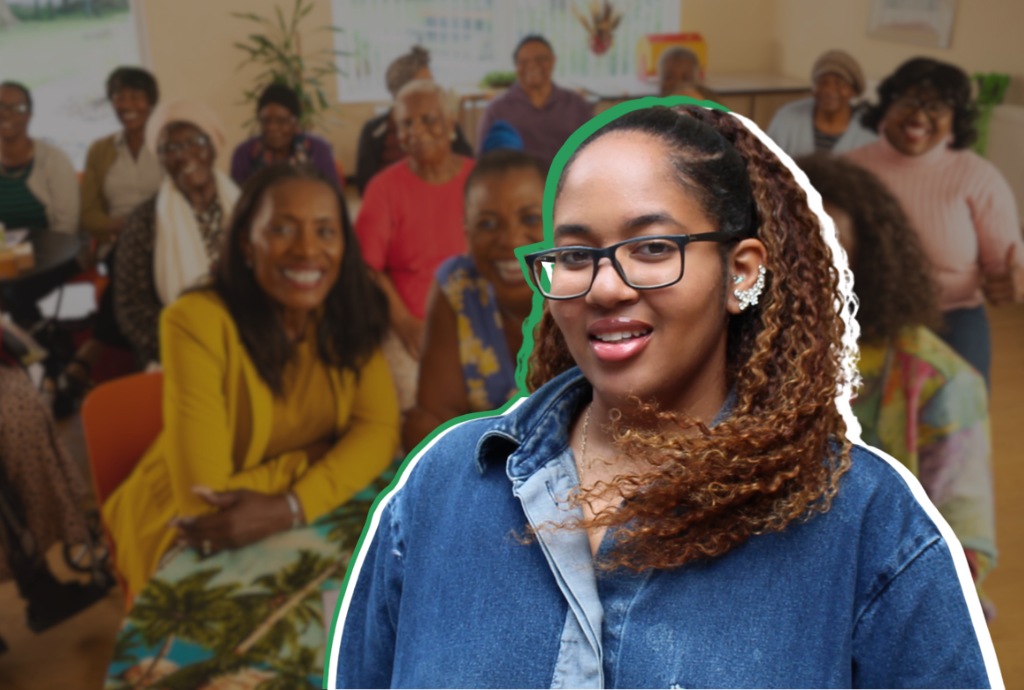

We sat down with Kim Allain, Golin’s Associate Creative Director to explore the powerful thinking behind Specsavers’ Auntie Army campaign. From uncovering health disparities to mobilising trusted voices in the African-Caribbean community, Kim shared how the campaign was built with authenticity, purpose, and real world impact at its heart.
What inspired the idea of the Auntie Army, and how did it evolve into a full campaign?
Specsavers have always championed the importance of regular eye tests, but they hadn’t yet created a campaign tailored to a specific community. I started digging into how eye health affects different groups and discovered that Black and Brown communities are up to four times more likely to develop glaucoma. Yet, from personal experience, I know these communities are often the least likely to seek out eye tests, largely due to mistrust and fear around health messaging. That insight sparked the idea for Auntie Army. I knew we needed to approach this in a way that would genuinely resonate, and who better to lead that message than our aunties, the trusted matriarchs in our communities.
How did you and the BLK@Golin team work with African-Caribbean communities to ensure the campaign felt authentic and respectful?
BLK@Golin played a crucial role. Their connections within the community really helped us shape the campaign with authenticity. Many of the team had family members affected by glaucoma which really helped us out when checking our tone and authenticity. We also worked closely with a DEI panel to review our scripts, ensuring we avoided stereotypes and spoke in a way that felt true to the community. BLK@Golin also guided us on the right media outlets to engage with, helping us reach both mainstream and niche platforms that cater specifically to Black audiences. That mix was key to making a real impact.
What were some of the biggest challenges or hurdles you faced during the development of this campaign?
One of the most significant challenges came after the content was created. During a review with our DEI panel, questions were raised about why we were focusing solely on this demographic, especially in the context of the world at that moment e.g. The Tommy Robinson march that had happened just weeks earlier, showing that certain narratives are still on the rise. We had to be incredibly mindful about how the content might be received and ensure it wouldn’t be misinterpreted or weaponised. We put safeguards in place, prepared contingency plans, and made sure we had robust data and facts to back up our messaging. Protecting our team and the people featured in the campaign was a top priority.
How did you tap into trusted spaces to make the message resonate?
We crafted the follow-up message to the content to mimic a chain message, something like “send this on to 10 people” because we knew that format would resonate with our auntie audience. The goal was for them to be the messengers, spreading the word in spaces they naturally influence. Working with the African Caribbean Care Group in Manchester was a game-changer. These real-life aunties were not only featured in the campaign but were also eager to share it with their families, church groups, and wider networks. That organic sharing helped the message reach the right spaces in a powerful way.
What concerns or sensitivities did you need to navigate when addressing health disparities in the African-Caribbean community?
We were very conscious of not coming across as patronising. We understood that many people in the community are already aware of these health issues, like the disparities in maternal health that were quite prevalent at the time, but there are complex reasons why they might not engage with healthcare services. Our aim was to acknowledge those realities while still emphasising the importance of eye health. It was about striking a balance: being respectful, informed, and empowering without preaching.
As a creative leader from the Black community, what are you most proud of about this campaign and its impact so far?
I’m proud of everything, but what stands out most is the real-world impact. Seeing comments from Black individuals saying, “This made me book an eye test” is incredibly powerful. It’s one thing to come up with a creative idea, but it’s another to see it drive meaningful change. That’s the kind of work I want to be part of. I’m also proud of how the BLK@Golin team rallied around the campaign. Their passion and commitment showed that this wasn’t just a project, it was something we all deeply cared about. And that’s because it came from a place of genuine purpose.