


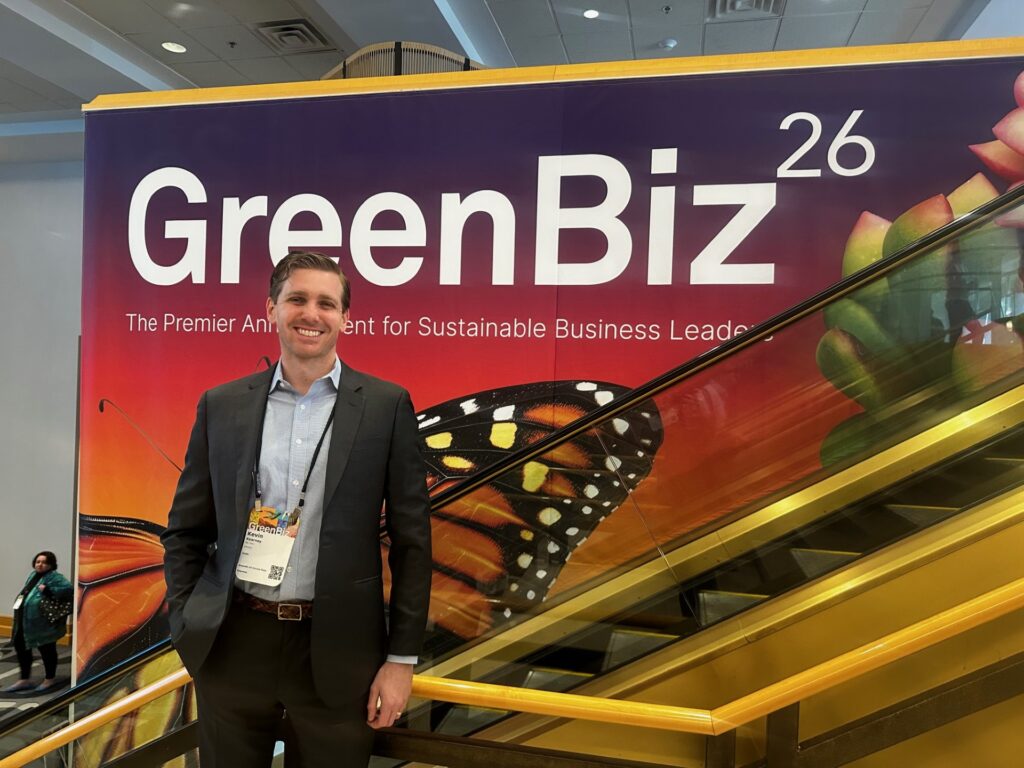
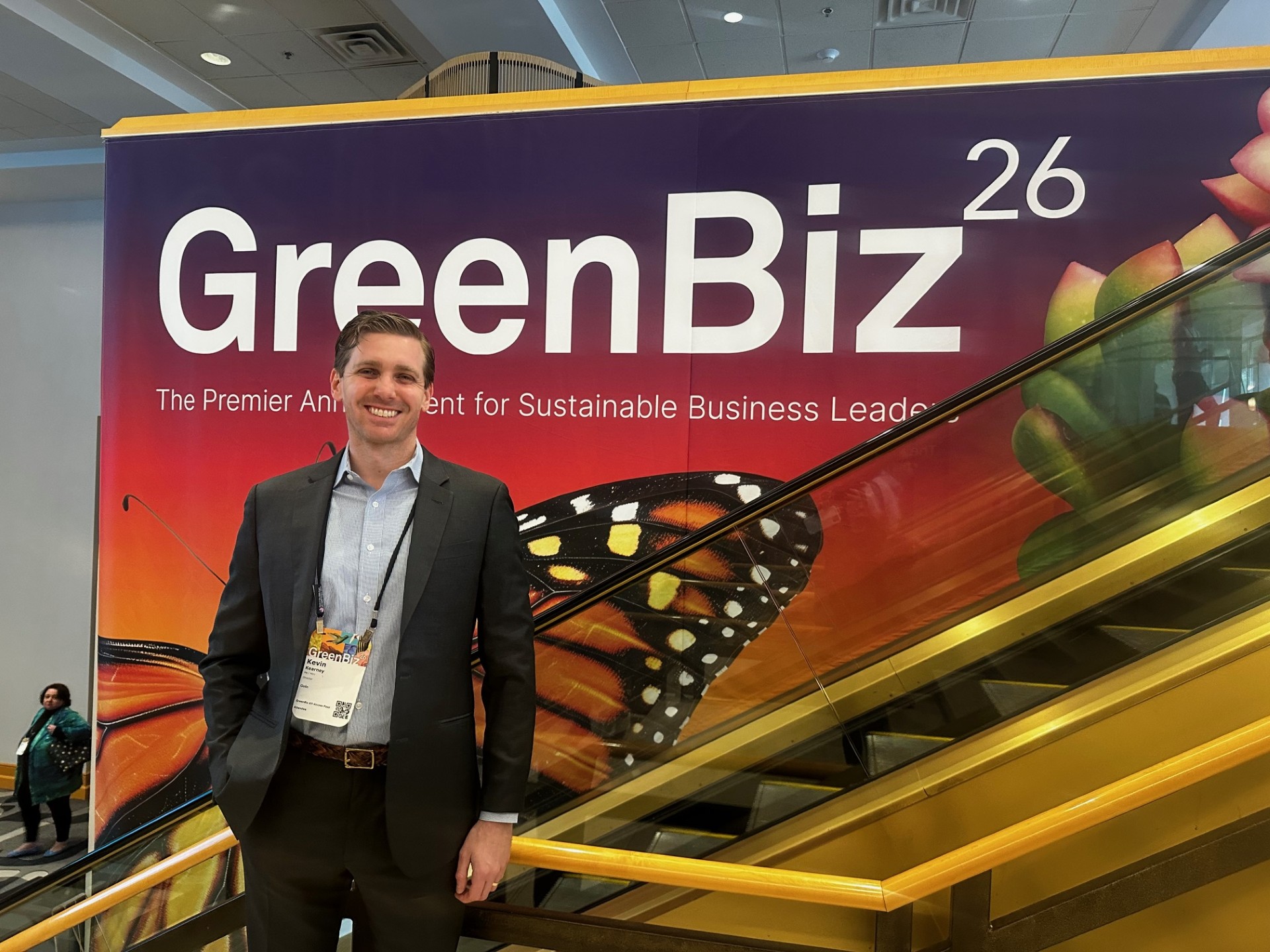
by Kevin Kearney, Director, Corporate Affairs
Corporate sustainability communications is at an inflection point. The annual GreenBiz conference represents one of the clearest barometers of where sustainability is heading, not just as a business practice, but as a storytelling and strategy challenge for the communications professionals who support it. This year’s gathering in Phoenix also made one thing clear: translating sustainability into language that resonates across the C-suite, with consumers and in the media has never been more consequential.
Here are the themes that stood out most for communications professionals.
Reframe the Work, Not the Commitment
Joel Makower, founder of the Trellis Group, opened by challenging attendees to think bigger about how they position sustainability. The underlying forces driving corporate action (climate risk, supply chain exposure and asset valuation) haven’t changed, even as public sentiment has shifted. The opportunity for communicators is to help clients move sustainability out of the “sustainability department” and into the language of risk, operations and long-term business value.
Far from being a retreat, that’s a promotion of the field.
Key Takeaway: When pitching sustainability stories to business media, anchor them in risk and resilience rather than environmental identity.
The Words Are the Problem (Not the Issues)
Research from Revolt/Anthesis found that 53% of consumers still want to hear from brands about sustainability, with the partisan gap here being narrower than most would assume. The problem isn’t that people disagree on the issues. It’s the language used to talk about them.
Messaging framed around shared values consistently outperforms activist framing across the political spectrum. “Securing a safe climate for my family’s future” lands differently than “fighting for climate justice for all.” GM’s Chris Gaither offered a pointed example: rather than leading with battery performance for every EV audience, his team highlights how the vehicle can power a home during a blackout for families in disaster-prone areas. Same product, but different story and better audience connection.
Sustainability communications consultant Mike Hower’s framework is useful here, too. As he noted, sustainability teams want accuracy, communications teams want resonance and legal wants defensible claims. Without alignment, the result satisfies no one. His four pillars – Context, Compelling, Credible and Compliant – are a practical starting point for getting those functions working together.
Key Takeaway: Audit your clients’ sustainability language. If it sounds like an activist campaign rather than a business conversation, it’s likely working against you.
AI Is Already in the Sustainability Report
The session on AI in sustainability reporting arguably had the most direct implications for communications teams. Google is already using Gemini to help draft its sustainability report, running the output through eight rounds of human review following. More interesting is what comes next: once the report is final, Google’s team uploads it to NotebookLM and prompts it to act as an investigative reporter looking for data gaps and greenwashing claims. It returns tough questions and suggested responses simultaneously, a useful application for issues and crisis teams.
Panelists also noted that the future of sustainability reporting isn’t an 80-page PDF. Rather, it’s a searchable document that investors, journalists and consumers can interact with directly. Communications teams that start thinking about reports as content architecture rather than compliance documents will be ahead of the curve.
Key Takeaway: AI is a useful pressure-testing tool before a report goes public. Think about sustainability disclosures as interactive content, not static publications.
Credibility Is the New Currency
Across sessions, one theme surfaced repeatedly: audiences are increasingly skeptical of polished sustainability storytelling. Gen Z registers measurable distrust of AI-generated emotional content, and researchers found that consumers experience what they describe as “moral disgust” when a green brand uses AI to manufacture feeling. KIND Snacks’ rollout of paper packaging was especially instructive, with them framing it as a “test and learn” rather than an outright victory, avoiding vague claims and layering the story across channels. Following, the packaging industry shifted and KIND’s credibility held.
Key Takeaway: Humble, honest storytelling is a differentiator right now. Audiences are looking for cracks in the narrative. Show the authentic journey, not just the destination.
The Bottom Line for Communications Teams
Despite recent policy shifts out of Washington, GreenBiz ’26 wasn’t about stepping back from sustainability. It underscored the importance of doing the work with more discipline, more honesty and a sharper awareness of audience. For communications professionals, this means helping clients speak the language of business leadership, pressure-testing claims before they become headlines and building the credibility that unlocks trust and future corporate progress.